
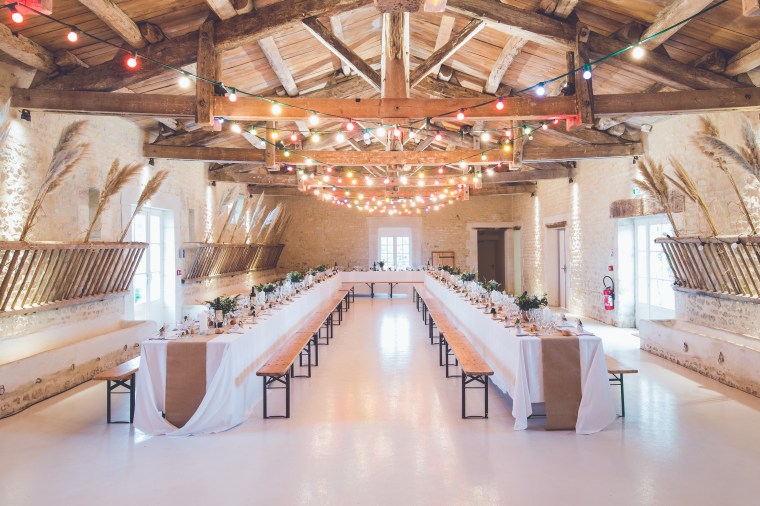

The most important part of choosing your event venue is to see if your desired date is available. Even if you don’t have a specific date in mind, you need to see what their availability is around the time that you are planning to have the event. If they aren’t available during the whole month of March, and you wanted to have a St. Patrick’s Day party, that venue probably won’t work out for you and you will want to keep searching.

Another big part of deciding whether this venue is the right one for you is knowing how many people they are able to hold. When I was planning my wedding, I had dreamed of a garden wedding, and had fallen in love with a particular venue that I had been to when I was younger for a garden walk. When I went back to meet with them about how they run weddings, I found out that they limit their guest count to 25 people, and we had a 180 person guest list. Obviously that wasn’t going to work within our constraints, and we had to move on to another venue.
One thing to consider regarding the guest count- make sure you know the guest count for each type of setup possible. A venue could accommodate 150 people for a cocktail-style party, but if you wanted a seated dinner they may only be able to hold 75. It’s helpful to know what each setup style means so that you can determine if that is the right feel for your event.

For most events, the venue and food/drinks are the largest expenses. It is important to make sure that the venue that you are looking at fits within your budget. It’s also very important to ask what is included in the price that you are given. You may be ok with a higher price if it also includes the food/drinks, DJ, and an event coordinator. It’s also smart to find out if they have any discounts for slower seasons. If you don’t care what time of year you hold your event, you usually can get a discounted rate for the times that they don’t normally fill up every night.

All venues that have been new construction since January 1992 must be handicap accessible, but older properties are only required to meet requirements within reasonable expectations. If you are hosting an event that is open to the public, you will want to make sure that the venue that you book is handicap accessible. If you are hosting a private event, you will know your guest list, and can determine whether you need that accessibility or not. I personally always lean toward booking an accessible venue, because in case one of my guests breaks their leg leading up the the event, I want them to be able to enjoy themselves and participate in all aspects of the event that they want to.

I always like to ask to see a typical contract for an event when I am first meeting with a venue. The contract is where they lay out all of their restrictions for your event (i.e. the event must be done by 8pm due to noise restrictions, you can’t hang anything on the walls, or no alcohol is allowed in the venue). You would hope that the venue would disclose these restrictions, but you don’t want to enter into a contract not knowing all of the terms that you will be held to.

Make sure to find out whether the venue provides liability insurance as part of your contract, or if you need to get it yourself. Often, this is a stipulation of the contract that you must obtain insurance so that in case anything happens you are covered.

It’s important to know who the point person is leading up to the event, and if that person will also be your point person on the day of the event. Whether it is an event coordinator, catering manager, or front desk assistant, you will want to make sure that you and that person are on the same page throughout the event planning process.

Make sure that you ask how many events are held at that venue each day. Some venues will allow multiple events back to back in the same venue. That can create some issues because if the first event runs long, it can affect the schedule of the rest of the day, and there is nothing that you can do about it. If there are separate spaces that can be booked, it may not be that big of a deal, but it is still important to know so that you can create appropriate signage to get your guests to the right event.

Making it easy for your guests to get to your event is absolutely key, and parking is a large part of that. It’s always helpful to have parking (either self-parking or valet) available at your venue, especially if your event is in a downtown area with limited parking. A best practice is to include the parking information on your invitation/flyer for the event, so you will want to know this information upfront.

Since event planning is an ever changing process, it’s important to know the last day that you are allowed to make changes to the event. Maybe you have decided to move it from inside to outside, or you have decided that you want black table linens rather than white. You will want to know what the last day is that you can change those details without an extra charge.
Let me know if you have any other questions that you normally ask when you are booking an event venue. I would love to hear your top questions!
Party on!

 partydarlings.com